
Views: 0 Author: Site Editor Publish Time: 2026-10-05 Origin: Site


Procurement teams often face a difficult choice when sourcing packaging. You want to keep production costs low by relying on standard, off-the-shelf tubes. However, you also need packaging that prevents expensive technical failures on active job sites. This tension creates a frustrating buyer's dilemma. Customization goes far beyond simple aesthetics. For high-performance sealants, it serves as a crucial functional requirement. You need specialized tubes to stop premature curing, ensure smooth dispensing, and secure premium retail shelf placement. Generic containers simply cannot handle advanced chemical formulations or rough environmental conditions.
This article provides a clear decision matrix for OEM brands, distributors, and manufacturers. We will help you evaluate exactly when transitioning to a specific 300 ml container makes strategic business sense. You will learn how to identify technical triggers, leverage private labeling for market growth, and calculate potential returns on your packaging investment. Upgrading your packaging strategy starts with understanding when standard options are no longer enough.
Customization becomes strictly necessary when standard wall thicknesses fail to provide adequate moisture barriers or burst under pneumatic dispensing pressure.
Private label brands achieve positive ROI on custom lithography and color-matching once annual volume reliably exceeds supplier Minimum Order Quantities (MOQs).
Evaluating a manufacturer for a customized plastic sealant cartridge requires auditing their tolerance controls (specifically plunger-to-wall fit) and tooling capabilities for custom nozzles.
Off-the-shelf packaging works perfectly fine for basic acrylic caulks. Advanced adhesives, however, demand structural integrity. When you push industrial formulas through standard tubes, physical limitations quickly become apparent on the job site.
Viscosity plays a massive role in packaging success. High-viscosity polyurethanes and structural epoxies require intense force to extrude. Professionals typically use high-pressure pneumatic caulking guns to apply these thick materials. Standard containers often fail under this stress. They burst at the seams or split along the side wall. This ruins the material and causes costly cleanup delays on active construction sites.
You must specify custom wall thicknesses to handle dense formulations. Adding structural reinforcement to a standard HDPE cartridge prevents sudden blowouts. The container must absorb internal pressure without deforming. We recommend implementing strict burst-pressure protocols.
Follow these steps to ensure structural safety:
Calculate the maximum dispensing pressure required for your specific formulation.
Specify an increased wall thickness at the base and mid-body of the tube.
Request prototype testing using pneumatic guns at extreme temperature variations.
Common Mistake: Relying on standard wall thickness for heavy-duty construction adhesives. This almost always leads to bursting issues in cold weather, where material viscosity naturally increases.
Chemical stability relies directly on barrier integrity. Moisture-sensitive formulations, like advanced silicones or hybrid polymers, react aggressively to their environment. They can cure prematurely inside the tube if the packaging lacks proper protection. This renders the entire product useless before the user even cuts the nozzle.
You can prevent premature curing by requesting customized material blends. Multi-layer co-extrusion processes add immense value here. This manufacturing technique layers different polymers together. It blocks harmful UV light, prevents moisture vapor transmission, and stops oxygen ingress. Custom barriers guarantee your product stays fluid and usable throughout its advertised shelf life.
The weakest link in an adhesive packaging cartridge is often the plunger seal. If the plunger does not fit perfectly against the inner wall, you face severe back-leakage. Product oozes past the seal during dispensing, ruining the application gun and frustrating the user.
You must detail the need for custom internal tolerances. Standard plungers often fail when paired with specialized mechanical pistons. Customizing the internal diameter ensures a flawless, tight fit. Furthermore, custom nozzles can dictate exact bead sizes for specialized applications like automotive glazing or marine sealing. A perfectly matched plunger and nozzle combination ensures smooth, professional extrusion every time.
Your packaging does more than hold chemicals. It acts as your primary marketing tool on crowded retail shelves. Generic packaging limits your brand's growth potential and reduces customer loyalty.
Retail hardware shelves are heavily saturated with generic packaging. Most brands use plain white tubes with basic adhesive stickers. These standard labels peel, wrinkle, or fade when exposed to tough environmental conditions. Rain, UV exposure, and rough handling on job sites quickly destroy basic paper labels.
Assess the transition from standard adhesive labels to custom direct-to-tube printing. Lithography, silk-screening, and in-mold labeling offer permanent visual solutions. Direct printing embeds your branding onto the plastic itself. The graphics remain sharp, legible, and highly professional regardless of site conditions. This visual durability builds immense trust with end-users.
Comparison Chart: Standard Labeling vs. Direct-to-Tube Printing
Feature | Standard Adhesive Labels | Custom Direct-to-Tube Printing |
|---|---|---|
Durability | Low. Peels in moisture and heat. | High. Resists water, friction, and UV. |
Brand Perception | Generic, budget-tier feel. | Premium, professional-grade finish. |
Unit Cost (High Volume) | Higher due to secondary application steps. | Lower, as printing happens during manufacturing. |
Environmental Impact | Mixed materials complicate recycling. | Single material simplifies the recycling process. |
Construction professionals rely heavily on rapid visual cues. A busy contractor does not have time to read fine print. They need to grab the right material instantly. Standard white packaging forces users to squint at small text, increasing the risk of application errors.
Using customized Pantone-matched tubes denotes different chemical grades immediately. You might use bright red for fire-rated sealants, blue for sanitary bathroom grades, and black for high-tack construction adhesives. This visual categorization directly reduces user error. It also drastically increases brand recall. Contractors will remember your color-coded system and seek it out for future projects.
Best Practice: Standardize your color palette across your entire product line. This trains your buyers to instantly recognize your brand family from across the retail aisle.
For premium formulations, counterfeiting presents a tangible supply chain risk. Fake products dilute your brand reputation and cause catastrophic failures on critical builds. Standard tubes make it incredibly easy for counterfeiters to copy your product and undercut your prices.
Integrating custom molded features provides robust protection. You can add custom embossed logos directly onto the plastic base. Proprietary thread patterns for the nozzle also deter unauthorized copying. Counterfeiters generally avoid products that require expensive custom molds. These unique physical features ensure brand authenticity and protect your profit margins.
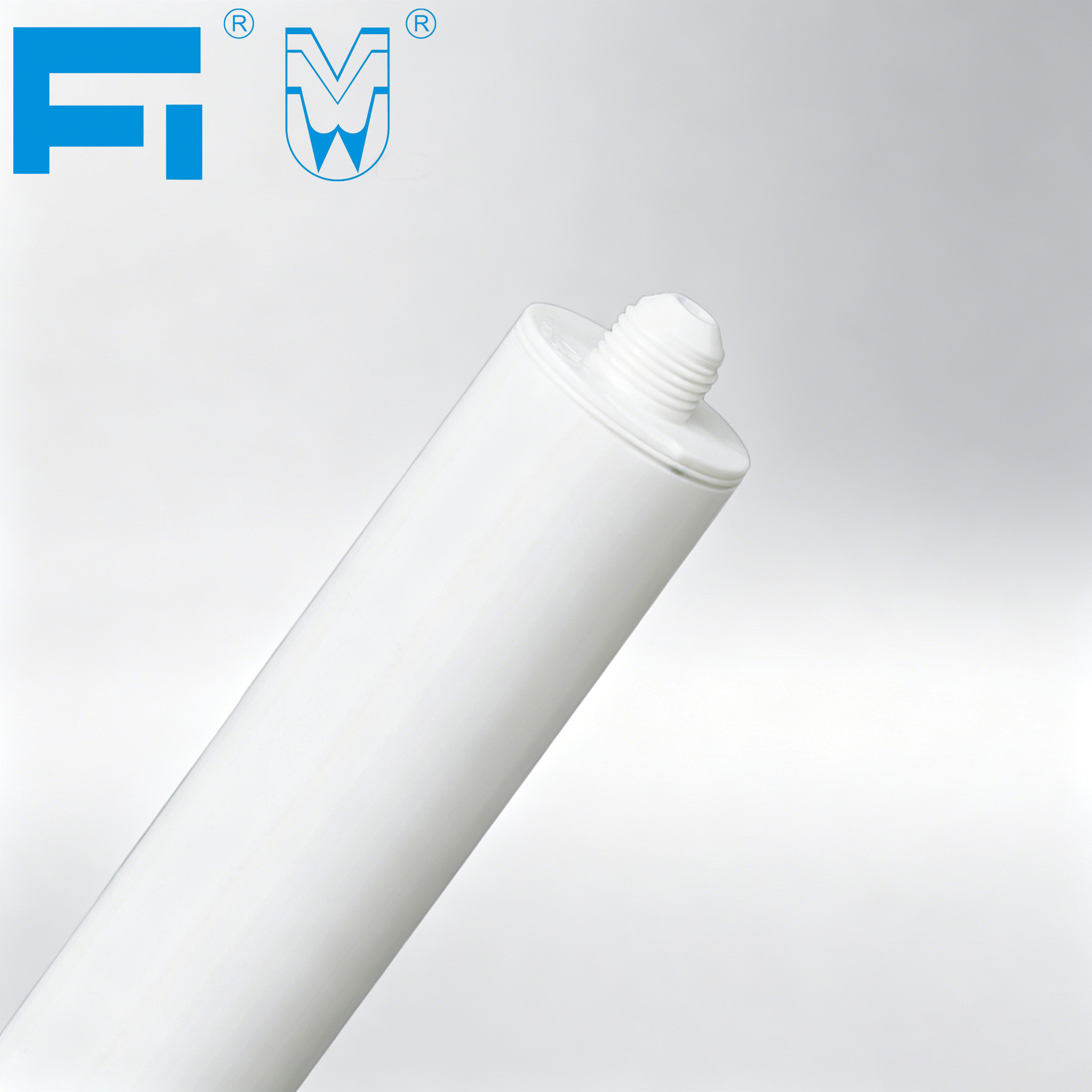
Upgrading your packaging strategy requires capital. You must justify this investment through clear, measurable returns. Custom solutions require upfront spending, but they often yield significant downstream savings.
You must transparently address the upfront costs involved. Custom molds for unique wall thicknesses carry tooling fees. High-resolution lithography requires print plates. Furthermore, custom runs often feature higher per-unit costs at lower production volumes. These expenses create a "customization premium."
This investment only yields a positive return if it solves specific problems. The reduction in product failure rates must offset the initial tooling costs. Fewer burst tubes mean fewer customer refunds and less wasted material. Additionally, premium packaging often allows you to command a higher retail price, easily covering the premium over time.
Standard containers offer comfortably low Minimum Order Quantities. Custom tubes, however, require manufacturing scale. Suppliers need large production runs to justify swapping molds and setting up printing presses.
You need a baseline framework to evaluate this step. If a buyer orders 50,000 or more units annually, upgrading makes mathematical sense. At this volume, bulk custom lithography often becomes more cost-effective than buying standard tubes and applying secondary labels in-house. A customized plastic sealant cartridge streamlines your internal production line, saving massive amounts of labor.
Relying on custom specifications means you are tied to specific supplier lead times. You cannot simply buy substitute tubes from a local distributor if your primary manufacturer faces delays. This creates a potential bottleneck.
Buyers must aggressively mitigate this risk. Evaluate your inventory holding costs and refine your demand forecasting before committing to a custom SKU. Maintain strategic safety stock for your most popular custom items. By planning ahead, you can enjoy the benefits of bespoke packaging without jeopardizing your supply chain flow.
A brilliant packaging design fails if the manufacturer cannot execute it consistently. Sourcing the right partner is just as critical as the design itself. You must audit suppliers strictly to ensure they meet industrial standards.
You must find out if the supplier owns their molds or if they outsource tooling. In-house engineering ensures much faster iterations for custom nozzles, threads, or plunger fits. Outsourced tooling often leads to massive delays and communication breakdowns during the prototyping phase.
Always request detailed dimensional tolerance reports. You want to see their data on concentricity and wall thickness consistency. If a tube is slightly oval instead of perfectly round, the plunger will fail. Precision engineering is non-negotiable.
A custom design is completely useless if the actual manufacturing is inconsistent. One bad batch can ruin your brand's reputation with contractors. Therefore, strict Quality Assurance (QA) is vital.
Ensure the supplier performs rigorous testing on custom batches before shipping. They should provide documentation for:
Drop Tests: Verifying the tube will not crack if dropped from scaffolding.
Burst Pressure Tests: Confirming the base and walls hold under pneumatic pressure.
Extreme Temperature Cycling: Ensuring the plastic does not become brittle in freezing conditions or warp in high heat.
Chemical Compatibility Checks: Guaranteeing the plastic polymer does not react with your specific chemical solvents.
Getting accurate pricing requires providing complete information. Vague requests yield inaccurate quotes and lead to expensive surprises later.
Advise your procurement team to specify all operational details in the initial RFQ. This helps filter out incapable vendors immediately. Your RFQ should clearly state the exact chemical compatibility required. You must list the primary dispensing method (manual vs. pneumatic). Note your targeted shelf life in months. Finally, provide your realistic annual volume projections. Providing these details upfront ensures you partner with a manufacturer capable of handling your specific technical demands.
Upgrading to a customized plastic sealant cartridge shifts packaging from a simple commodity to a strategic business asset. Purpose-built packaging protects your formulation integrity, stops premature curing, and eliminates messy blowouts on the job site. Visually, direct-to-tube printing and color-matching build long-term brand equity and protect your products from cheap counterfeits.
Buyers should thoroughly audit their current failure rates. Track how many tubes burst or dry out prematurely. Calculate the hidden labor costs of applying secondary labels. Once you analyze these metrics, you can clearly determine if you have crossed the threshold where customized production pays for itself.
We highly encourage you to consult directly with a packaging engineer. Request a physical sample of custom containers to test rigorously against your specific formulation. Proactive testing is the best way to ensure your packaging elevates your product's performance in the field.
A: Minimum Order Quantities vary heavily by manufacturer. They typically start between 10,000 to 50,000 units for custom lithography printing. However, custom structural molds may require significantly higher volume commitments to offset the initial tooling and engineering costs.
A: External dimensions usually remain fully compatible with standard caulking guns. However, internal diameter changes might slightly alter the exact fill volume capacity. This dimensional shift will also require a uniquely sized plunger to ensure a proper, leak-free seal.
A: Timelines depend on the complexity. Color matching and custom printing usually add 2 to 4 weeks to standard lead times. Developing custom tooling for an entirely new physical design can take 6 to 12 weeks from the initial prototype to final production.